Introduction
You walk downstairs after a heavy rain and your sneakers hit a damp floor. Your stomach drops. Then the second worry arrives. Someone is going to quote you thousands of dollars, and you have no idea whether it will actually fix anything.
That fear is fair. Plenty of homeowners have paid for a “permanent solution” and still found water a year later. Others have spent a few thousand dollars and never had a wet basement again. The difference is rarely luck.
So, does basement waterproofing work? Yes, but only when the method matches where your water is really coming from. A drain cannot fix a roof runoff problem. Paint cannot stop a leaking crack. The right fix for the wrong cause is wasted money.
This guide gives you the unbiased version. You will learn how each method works, what it costs in Cherry Hill, NJ, what homeowners complain about, and which sales red flags to watch for before you sign anything.
The Short Answer: Does Basement Waterproofing Actually Work?
It works when it is designed around your water source. It disappoints when it is not.
Here is the truth most sales pitches skip. Waterproofing usually manages water. It does not magically “seal out” the pressure that wet soil places on your foundation. When the ground around your home is saturated, water pushes against the walls and floor. That force is called hydrostatic pressure, and it never takes a day off.
Because of that, the strongest systems do not fight the water. They give it a path. Water gets collected, directed to a sump pit and pumped away from the house. Interior drainage is often described as not technically waterproofing. It is water control, and it is widely accepted as a solution because it works.
That difference explains why so many people feel burned. Quick fixes like wall paint, sealers and DIY kits treat the surface. They do nothing about the pressure behind it. When the water returns, the homeowner assumes the whole industry is a scam.
So think in terms of water management versus absolute exclusion:
- Water management collects and removes water that reaches your foundation.
- Exclusion keeps water from touching the wall at all, which usually means exterior work.
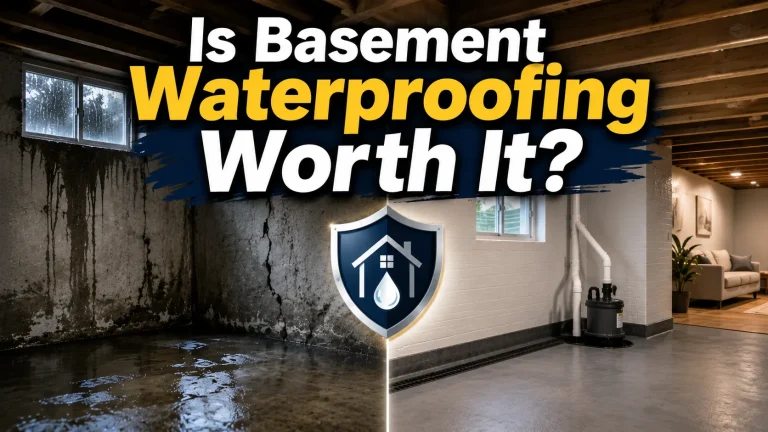
Both approaches can succeed. If you are still deciding whether the investment makes sense, our guide on whether basement waterproofing is worth it explains the warning signs that justify action. And if you have a crawl space instead of a full basement, crawl space encapsulation handles moisture in that area.
Interior vs. Exterior Methods: Which One Actually Delivers?
Most professional systems fall into two groups. They differ in where the work happens and how they treat water.
What is interior basement waterproofing?
Interior waterproofing deals with water after it reaches your wall. Professionals call it a negative-side approach, because it works from the inside of the foundation. Common techniques include:
- Waterproofing basement walls from inside with sealers, coatings or crack injection.
- Interior drainage channels along the wall and floor joint.
- An interior French drain connected to a sump pump.
- Vapor barriers and dehumidification for moisture control.
How does an interior French drain work? A contractor cuts a strip along the inside perimeter of the floor. A perforated pipe goes in a gravel bed below the slab. Water that seeps through the walls or the joint drops into the pipe and flows to a sump pit. The pump then sends it outside.
For leaking cracks, injection is often the targeted fix. Polyurethane injection works for active leaks because it stays flexible. Epoxy suits dry cracks that need structural bonding. See our page on foundation crack repair for how each type of crack is diagnosed. For drainage, learn more about our French drain installation process.
What is exterior basement waterproofing?
Exterior waterproofing stops water before it touches the wall. It is the positive-side approach. If you are wondering how to waterproof a basement from outside, the process looks like this:
- Excavate down to the footing.
- Clean the foundation wall and repair damage.
- Apply a waterproof membrane to the wall.
- Install exterior drain tile at the footing.
- Backfill with gravel and regrade the soil.
Angi notes that some of the most effective and permanent methods keep runoff and groundwater away from foundation walls entirely.
How do they compare?
| Factor | Interior | Exterior |
|---|---|---|
| How it works | Collects water and pumps it out | Blocks water at the wall |
| Effectiveness | Strong for seepage and pressure | Strongest at the source |
| Durability | Drain tile often 20 to 30 years, pump shorter | Often 20 to 50 years depending on material |
| Disruption | Inside work, little yard damage | Digging, landscaping and access issues |
| Typical cost | Lower | Higher |
Neither is always better. Interior systems suit finished basements and homes with tight access. Exterior work makes sense when water enters at many points, during an addition, or when the wall itself needs protection. Many problems are best solved by combining both.
How Basement Drainage and Sub-Systems Work
Every drainage system follows the same basic logic. Collect the water. Move it. Remove it.
How does basement drainage work? Groundwater builds up around the footing. A perforated pipe sits at that low point and gives the water an easier path than your wall. The pipe slopes toward a sump pit. A pump in the pit pushes the water out and away.
How does drain tile work in a basement? The name comes from old clay tiles. Today it is usually perforated plastic pipe surrounded by washed gravel. Water enters the holes, travels through the pipe and reaches the pit. Gravel keeps fine soil from clogging it.
How does weeping tile work? It is the same idea under another name. “Weeping tile” is common in Canada and parts of the northern US. Our French drain installation page lists the steps we follow. They include fabric lining, a clean gravel base, a sloped pipe and a proper discharge point.
The sump pump is the engine
Drain tile only works if the pump works. The two form one system. A pump that fails during a storm turns a great drain into a bathtub. Many installers recommend a battery backup, because storms often cut power. Pumps typically last 7 to 10 years, so plan on testing and replacing them. We cover options on our sump pump installation page.
What about DIY products?
Does Drylok work? Sometimes. It depends on the problem.
Drylok is a masonry waterproofing paint. The manufacturer rates Drylok Extreme to resist 15 psi of hydrostatic pressure in ASTM D7088 testing, and Drylok Original to 10 psi. Those are lab results on properly prepared masonry. They are not a guarantee for a wall with active leaks.
Independent testing tells a more careful story. In a real-world test by Green Building Advisor, Drylok did not stop water under hydrostatic pressure, though it did stop wicking. The author suggested it may work only if a wall will never see that pressure.
Here is a practical rule. Coatings and a basement waterproofing kit can help with minor dampness on bare masonry. They are the wrong tool for flowing water, cracks or a high water table. Also note that applying Drylok over existing coatings voids its warranty.
The Real Cost of Basement Waterproofing (Plus ROI Analysis)
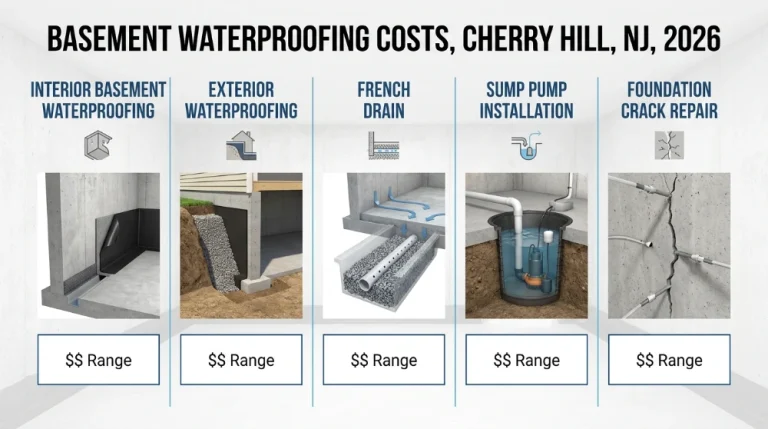
How much does it cost to waterproof a 1,000 sq. ft. basement? For Cherry Hill, NJ, our 2026 pricing guide shows about $3 to $10 per square foot. That puts a standard 1,000 sq. ft. basement at roughly $3,000 to $10,000. Full exterior excavation can run $8,000 to $20,000 or more.
| Method | Typical Cherry Hill cost |
|---|---|
| Foundation crack repair | $350 to $900 per crack |
| Sump pump installation | $600 to $2,500 |
| Battery backup add-on | $200 to $600 for an existing pump |
| Interior waterproofing and French drain | $60 to $120 per linear foot |
| Exterior waterproofing | $100 to $250 per linear foot |
| Full exterior system (about 130 ft perimeter) | $8,000 to $15,000, before landscaping |
These are estimates, not quotes. Size, access, soil and severity change the number. See our full breakdown of basement waterproofing costs in Cherry Hill, NJ.
Does it pay off?
It depends on what you want. Waterproofing is mostly protection, not decoration. Buyers do not pay extra for a sump pit the way they pay for a new kitchen. They do pay less, or walk away, when they see water stains and a musty smell.
Published ROI claims vary wildly. Some sources say you recoup a fraction of the cost. Others say you get all of it back. Most of those numbers come from contractors and marketing guides, so treat them with caution. The sound way to judge value is simpler:
- Will it let you finish the space and use it?
- Will it stop recurring damage and mold treatment costs?
- Will it remove a major objection when you sell?
If you answered yes to any of those, the case gets stronger. If a basement has stayed dry through several seasons, you may not need a system at all.
The downsides nobody likes to mention
- Upfront cost. It is a large expense for a repair that adds no visible luxury.
- Disruption. Interior work means jackhammering a floor strip. Exterior work means trenches around your house.
- Ongoing maintenance. Pumps wear out and need testing.
- False security. A system built for the wrong cause will fail, and you may not know until the next storm.
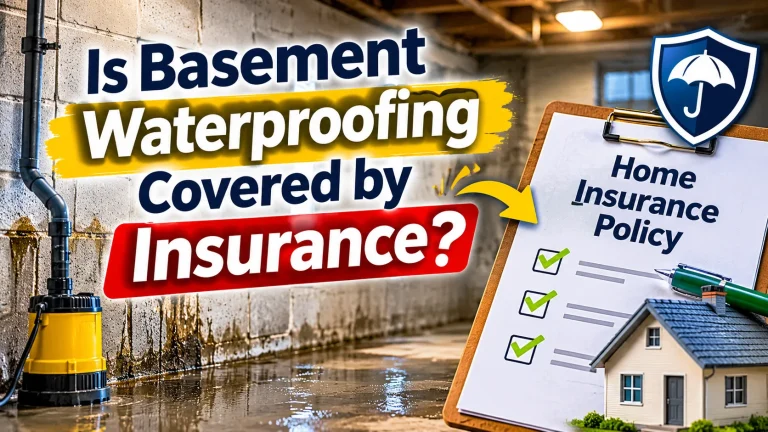
A dry basement also protects what you keep inside it. If you have a finished space, check how your policy handles water. Our guide on whether basement waterproofing is covered by insurance explains where coverage ends. If moisture has already caused growth, mold remediation may be part of the plan.
Real Homeowner Experiences: Beating the Reddit Echo Chamber
Search “does basement waterproofing work Reddit” and you will find two camps. Contractors say everything works if you buy their system. Forum veterans often say nothing works and every quote is a rip-off. Both are too simple.
Reading across homeowner discussions and related coverage, a few themes keep repeating:
- Skepticism about paint. Homeowners ask whether waterproof paint really works. The usual answer is that it helps with dampness but is a band-aid for real leaks.
- Fear that interior systems only treat symptoms. One Reddit post, later covered by a home news site, ended with the advice that interior work may be a band-aid when the exterior cause is untouched. Sometimes that is true. Often a drainage fix plus better grading solves it.
- Sticker shock. In public forums, owners post quotes of $19,000 to $24,000 and ask if they are real. The honest answer is that big numbers exist but need a diagnosis to justify them.
- Conflicting advice. One person says spray foam, another says never, and a third says dig the outside. That confusion is why a clear diagnosis matters.
We could not pull hard statistics from individual Reddit threads. So treat these as patterns, not data. What the cost and lifespan guidance does show is where failures tend to start.
What fails most often
- Cheap or undersized sump pumps. Pumps typically last 7 to 10 years. A neglected one fails when you need it most.
- Drain tile that was never serviced or was poorly installed. Clogged or badly sloped pipe stops working.
- Systems that ignore the cause. Gutters dumping next to the wall or poor grading will beat any drain eventually.
What tends to last
Properly installed interior drain tile is commonly rated at 20 to 30 years or more. Exterior membranes are often cited at 20 to 50 years, depending on material and install quality. Grading and downspout work can last indefinitely when kept clear. Longevity comes from the right design and basic upkeep.
How to Spot Predatory Contractors and Avoid Scams
Waterproofing is an industry with good companies and aggressive ones. You deserve to know the difference.
Red flags
The Better Business Bureau warns homeowners to watch for:
- High-pressure sales tactics.
- Cash-only deals.
- Large upfront payments.
- Handshake deals with no written contract.
In waterproofing specifically, add these:
- “Today only” discounts that vanish if you wait.
- Fear tactics, such as claims that your foundation will collapse.
- Insisting both spouses must be home for a long in-house presentation, a tactic New Jersey consumers have flagged.
- Door-to-door offers after a storm.
- Badmouthing every competitor.
For context, the FTC received more than 81,000 home improvement scam reports in 2024.
How to vet the best basement waterproofing companies
If you search for basement waterproofing near me, use this checklist before you shortlist anyone:
- Confirm they are licensed and insured. In New Jersey, ask for their home improvement contractor registration number.
- Get at least three written estimates.
- Read reviews and check the BBB profile at bbb.org.
- Ask for local references and call them.
- Insist on a detailed written contract that matches the quote.
Questions that expose upselling
- What is the source of the water, and how did you determine it?
- Why this method and not a cheaper one?
- What exactly is included, and what is not?
- What does the warranty cover, and is it transferable?
- Who handles pump maintenance, and how often?
- Can I see your license, insurance and permits?
A good contractor diagnoses first and sells second. They inspect the walls, check the grading and gutters, and explain what they found. We follow that approach at Waterproofing Cherry Hill. Learn more about us or browse our waterproofing services.
Frequently Asked Questions
Is it worth it to waterproof a basement?
Yes, if you want to finish the space, protect your foundation, or stop mold and recurring leaks. It is less compelling if the basement stays dry through heavy rain. Compare the cost with your local market and your plans. A proper diagnosis shows whether you need a full system or a smaller repair.
How much does it cost to waterproof a 1,000 sq. ft. basement?
In Cherry Hill, NJ, a typical 1,000 sq. ft. basement runs about $3,000 to $10,000. Interior trenching and a sump pump sit toward the lower end. Full exterior excavation can reach $8,000 to $20,000 or more. Your final price depends on perimeter length, access and how severe the water problem is.
What is the negative side of waterproofing?
The main downsides are high upfront cost, disruption, and upkeep. Interior work breaks up your floor. Exterior work digs up your yard. Sump pumps need testing and eventual replacement. The biggest risk is hiring a company that sells the wrong system without finding the real cause.
How long does waterproofing a basement last?
It varies by method. Interior drain tile commonly lasts 20 to 30 years or more, but the sump pump usually needs replacing every 7 to 10 years. Exterior membranes are often cited at 20 to 50 years depending on material and installation. Regular maintenance helps every system last longer.
Does Drylok actually stop basement leaks?
Drylok helps with minor dampness on bare masonry walls. It is not designed to fix active leaks, flowing cracks or constant water pressure. Lab ratings and real-world results can differ. If water keeps returning, you likely need drainage, crack repair or exterior work, not another coat.
Final Thoughts
So, does basement waterproofing work? Yes, when the fix fits the cause. Drainage handles pressure. Crack repair handles leaks at a wall. Grading and gutters handle runoff. Paint handles light dampness. Matching them correctly is the whole game.
The smartest first step is a real diagnosis. Skip the fear tactics and the “today only” pricing. Get written estimates, ask hard questions, and choose a team that explains its reasoning.
If your basement is wet, damp or just worrying you, request a free written estimate from Waterproofing Cherry Hill or call (856) 652-8553. We are licensed and insured in New Jersey and serve Cherry Hill, Marlton, Voorhees, Pennsauken and Camden County. You can also read our FAQs for quick answers.
This article is general information. Costs and results vary by home, so get a professional inspection before deciding.