Quick Answer: Does Insurance Cover Basement Waterproofing?
No. A standard homeowners policy does not pay for basement waterproofing. Insurers treat it as home maintenance, in the same category as repainting a deck or replacing an old water heater before it fails. Policies are built to pay for sudden and accidental damage. They are not built to upgrade your house so water stays out.
There is one important detail, though. Your insurance may pay for the damage water causes in certain situations. A burst pipe or a leaking water heater is usually covered. Heavy rain, groundwater and a rising water table usually are not. A sump pump failure or sewer backup is covered only if you added a water backup endorsement.
So the answer comes in two parts. The waterproofing system itself is your cost. Cleanup and repairs after a covered event may not be. The rest of this guide shows where that line sits, so you know what to expect before you ever file a claim.
Insurance Coverage for Waterproofing Basements: The Golden Rule
Here is the rule that explains almost every denial. Insurance pays to fix what a covered event broke. It does not pay to stop a problem from happening again.
Waterproofing falls on the “prevention” side of that line. Think about what the work involves. A contractor handles French drain installation along the footing, adds a pump, seals the walls or regrades the soil. Each of those is a permanent improvement to your home. Insurers see it as upkeep, not a loss.
It helps to separate two kinds of work:
- Reactive repairs fix a sudden disaster. Examples include replacing soaked drywall, flooring and insulation after a pipe bursts.
- Proactive waterproofing keeps water out in the future. Examples include French drains, sump pumps, wall sealants, exterior membranes and foundation grading.
Insurance can respond to the first group when a covered peril caused the damage. It almost never responds to the second.
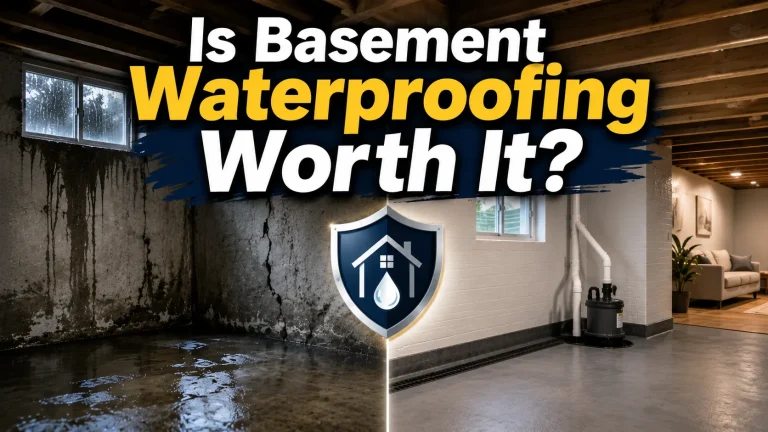
Picture a storm that floods your basement. Even if your policy somehow pays for the ruined drywall and carpet, it will not pay for the drainage system that would have prevented it. You would rebuild the finished space and still have the same weak spot underneath. That is why many homeowners fix the cause first. If you are still weighing that decision, our guide on whether basement waterproofing is worth it walks through the warning signs and the trade-offs.
Does Home Insurance Cover Basement Leaks and Seepage?
Usually not. Most of the confusion comes from two phrases that sound similar but mean very different things to an insurer.
Sudden and accidental describes damage that happens quickly and unexpectedly. A supply line snaps, a washing machine hose bursts, or a water heater tank splits. Standard policies generally cover this kind of event, including the resulting damage to your basement.
Gradual seepage describes water that works its way in over time. Think of damp walls, a wet floor after every rain, or a slow leak through a crack. Insurers exclude it because it is seen as a maintenance issue you could have caught and fixed.
Now add heavy rain to the picture. Surface water, groundwater and rising water tables are excluded from standard homeowners policies. When saturated soil pushes water through your foundation, the policy does not see a sudden accident. It sees ground water, and that is excluded.
Insurers also draw a firm line around flooding, which means water coming in from outside the home. State Farm, for example, explains that standard homeowners coverage generally does not cover floodwater entering from outside. It also notes that water damage in a basement coming through a window is typically excluded from a standard policy but may be covered under a flood policy after a declared flood. The same company points to optional coverages for water backup and sump pump issues.
Other carriers use their own wording, so the details vary. The pattern does not. Water that starts inside the home suddenly is often covered. Water that arrives from the ground or the sky is not. Read your own policy and ask your agent to confirm in writing.
If you already see seepage, a small crack may be the entry point. Prompt foundation crack repair is usually far cheaper than the cleanup that follows a leak.
Policy Loopholes: When Insurance Will Pay for Basement Water Damage
“Loophole” is a strong word. These are not tricks. They are the situations where your policy really does respond, and knowing them helps you file an accurate claim.
Sudden internal plumbing failures
A burst pipe, a failed water heater or an overflowing washing machine is the classic covered event. Insurance typically pays for the water damage to your walls, floors and belongings. It may not pay to repair the pipe or appliance that failed.
Backups from internal lines
If a clog inside your home causes a toilet or drain to overflow, some policies treat it as a covered accidental discharge. Backups from the main sewer line or a sump pump are different. Those usually need the water backup endorsement covered in the next section.
Wind-driven rain through a damaged roof or window
When a storm damages your roof or windows first and rain enters from above, the damage is often covered. The key is the order of events. The storm opens a hole, and then water follows. That is very different from groundwater coming up through the floor.
How to frame your claim correctly
You cannot change the cause of a loss, and you should never try. You can make sure the real cause is documented clearly. These steps help:
- Find and record the source. Take photos and video before you clean up. Show where the water came from.
- Stop further damage. Shut off the water and start drying. Insurers expect reasonable steps to limit the loss.
- Get a professional opinion. A plumber’s written report on a failed pipe or fixture is strong evidence of a sudden event.
- Report quickly and factually. Describe what happened in plain terms. Do not guess at causes you do not know.
- Keep every receipt. Save invoices for drying, repairs and temporary housing.
- Ask for the coverage decision in writing. If you disagree, you can ask for the specific policy language used.
Honest, well-documented claims are the ones that get paid. If water also left moisture behind, address it quickly, because lingering damp can lead to mold remediation costs that many policies treat very differently.
The Critical Add-On: Water Backup and Sump Pump Riders
This is the gap that surprises most homeowners. Standard policies usually exclude damage from a sump pump failure or a backed-up sewer or drain. Yet those are two of the most common reasons basements flood.
A water backup and sump pump overflow endorsement is an optional add-on that fills that gap. It typically covers damage when:
- A sewer, drain or septic line backs up into your home.
- A sump pump fails or overflows.
Depending on the insurer, it can help pay for cleanup, flooring, drywall and damaged belongings. Insurers also note limits. The endorsement may cover damage from a failed pump but not the pump itself, and it will not cover true flooding.
The cost is modest. Estimates from insurers and comparison sites commonly put water backup coverage at roughly $50 to $250 per year, depending on your limits, your home and your location. Some sources report prices as low as $30 for smaller limits.
Compare that with the other side of the ledger. The average homeowners claim for water or freezing damage is often reported at $10,000 to $15,000 or more, according to figures based on Insurance Information Institute data. About one in 60 insured homes files such a claim each year. A finished basement with new flooring, drywall and furniture can cost far more to restore.
Read through homeowner discussions on Reddit and similar forums, and the same story keeps appearing. A basement floods, the sump pump fails, and the owner learns the policy never included backup coverage. Most of those painful surprises were avoidable with a short call to an agent.
If you have a sump pump, treat this endorsement as a priority. Pair it with a reliable pump. Our team handles sump pump installation, including battery backup options for power outages.
Another Option: Flood Insurance (NFIP vs. Private Policies)
Insurers define a flood as water covering normally dry land, such as surface water rising from outside. Standard homeowners policies exclude it. To cover flood damage you need a separate flood policy.
There are two main sources:
- The National Flood Insurance Program (NFIP). This is the federal program run by FEMA. It is the most common source of flood coverage in the United States.
- Private flood insurance. Some private insurers offer flood policies, and they may offer higher limits than the NFIP, according to the Insurance Information Institute.
Basements are where flood policies get tricky. FEMA states that basement coverage through the NFIP is limited. It defines a basement as any area with a floor below ground level on all sides. In those spaces, coverage focuses on specific building items and cleanup, such as essential equipment, rather than finished walls, carpet and furnishings. Some items are covered only if you buy optional contents coverage. You can read the details in FEMA’s fact sheet, What Does Flood Insurance Cover in a Basement?.
So how much is flood insurance? There is no single number. Premiums depend on your flood zone, your home’s elevation, the coverage you choose and whether you use the NFIP or a private carrier. Ask an agent for quotes from both. If you want a starting point on risk, FEMA’s flood map tools and FloodSmart.gov are good places to begin.
One more thing. Flood coverage is not a waterproofing fix either. It pays after a covered flood. It does not stop the next one.
Cost Breakdown: Waterproofing vs. Repairing Water Damage
Since insurance will not pay for waterproofing, the next question is the price. Costs vary by home size, soil, access and method. The ranges below are typical figures drawn from commonly reported industry sources, not quotes.
| Service | Typical cost |
|---|---|
| Crack injection repair | $250 to $800 |
| Interior drainage | $50 to $150 per linear foot |
| Sump pump installation | $600 to $2,000 |
| Whole-basement interior system | $2,000 to $7,000 |
| Full exterior excavation system | $8,000 to $15,000 or more |
Interior systems manage water that reaches the basement. Exterior systems stop water at the foundation wall, and they cost more because of the excavation. National averages for a full project often land between about $3,000 and $10,000, depending on the method.
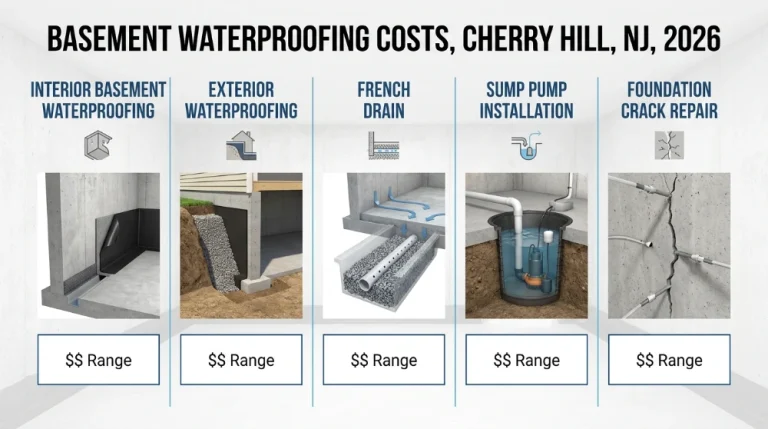
Now compare that with a single major flood. Cleanup, drywall, flooring, mold treatment and replacing belongings can quickly reach five figures. Many homeowners find that fixing the cause costs less than one uninsured flood. For local pricing, see our breakdown of the cost of basement waterproofing in Cherry Hill, NJ.
Is waterproofing a basement tax deductible? Generally, no. For a personal residence it is treated as a home improvement or repair, not a deduction. A true capital improvement may be added to your home’s cost basis, which can lower the taxable gain when you sell. Rental properties and a qualifying home office can follow different rules. Check with a tax professional.
What You Can Do To Protect Your Basement
Prevention protects your home and your claim. Insurers can deny losses tied to neglect or poor maintenance, so a well-kept basement puts you in a stronger position.
Start with these steps:
- Move water away from the foundation. Extend downspouts several feet from the house and keep gutters clear.
- Fix the grading. Soil should slope away from your walls, not toward them.
- Test your sump pump. Pour water into the pit every few months and confirm it activates and discharges.
- Add a battery backup. Storms that cause flooding often cause power outages too.
- Seal and repair cracks early. Small cracks widen. Book foundation crack repair before they turn into leaks.
- Install drainage where needed. A French drain system relieves the water pressure that pushes moisture inside.
- Check the crawl space. If your home has one, crawl space encapsulation controls moisture that rises into the living space.
Not sure where to begin? Browse our full list of waterproofing services or ask for a diagnosis. Fixing drainage problems is the surest way to avoid a “lack of maintenance” denial later.
Frequently Asked Questions
How much should it cost to waterproof my basement?
Most projects fall between $2,000 and $7,000 for an interior system, and $8,000 to $15,000 or more for full exterior excavation. Crack repair and sump pumps cost less. The final price depends on basement size, soil, severity and access. A written estimate after an inspection gives the most reliable number.
Does homeowners insurance cover basement waterproofing?
No. Standard homeowners insurance does not pay for proactive waterproofing such as French drains, sump pumps or sealants. Insurers consider these maintenance or improvements. A policy may cover resulting damage from a covered event, like a burst pipe, but not the system that prevents future water entry.
Is waterproofing a basement tax deductible?
Usually not for a primary home. The cost generally cannot be deducted in the year you pay it. A qualifying improvement may increase your cost basis and reduce taxable gain when you sell. Rental properties and home offices can be treated differently, so confirm with a tax professional.
Why is my basement flooded after heavy rain?
Heavy rain saturates the soil around your foundation. Water then builds hydrostatic pressure against the walls and floor. It finds weak points such as cracks, cove joints and gaps around pipes. Poor grading, clogged gutters and a failed sump pump make it worse. A drainage system relieves that pressure.
My basement flooded, what will insurance cover?
It depends on the cause. If a covered peril like a burst pipe caused it, your policy may pay for drying, repairs and belongings. If heavy rain or groundwater caused it, a standard policy will not. Sump pump failure and sewer backup need a water backup endorsement. Flood damage needs flood insurance.
Final Thoughts
Basement waterproofing is not covered by insurance. Standard policies pay for sudden, accidental damage from events like burst pipes, and they exclude groundwater, seepage and flooding. A water backup endorsement and a flood policy can close important gaps, but neither one pays to waterproof your home.
The smartest move is to do two things together. Review your coverage with your agent, and fix the cause of the water so you never need to test it. Our guide to the cost of basement waterproofing in Cherry Hill is a good next read, and our FAQs answer more common questions.
If your basement is damp, leaking or at risk, request a free written estimate from Waterproofing Cherry Hill or call (856) 652-8553. We are licensed and insured in New Jersey and serve Cherry Hill, Marlton, Voorhees, Pennsauken and the rest of Camden County.
This article is general information, not insurance or legal advice. Coverage varies by policy and insurer, so confirm details with your agent.